
Roofs do not fail suddenly. Most problems develop gradually as shingles age and lose their protective performance. Homeowners eventually reach the point where they must decide whether it is time to replace shingles or continue making repairs.
Knowing the typical lifespan and early warning signs helps homeowners plan roof maintenance and avoid costly damage caused by leaks or structural deterioration.
Average Lifespan of Roof Shingles
Not all asphalt shingles last the same amount of time. Materials, design, and manufacturing quality affect durability.
3-Tab Asphalt Shingles
Three-tab shingles are the most basic asphalt roofing product. They are lightweight and cost-effective, but they have the shortest lifespan.
Typical lifespan: 15 to 20 years
These shingles are installed on many older homes. Over time, they may curl, crack, or lose granules faster than thicker products.
Architectural (Dimensional) Shingles
Architectural shingles are now the most common roofing material used on residential homes. They are thicker and designed to withstand stronger wind and weather conditions.
Typical lifespan: 25 to 30 years
Their layered design improves durability and curb appeal.
Premium or Luxury Asphalt Shingles
Premium asphalt shingles mimic the look of slate or cedar shake roofing. They are thicker and built to handle extreme conditions.
Typical lifespan: 30 to 50 years
They are often chosen for higher-end homes where appearance and durability both matter.
Why Manufacturer Warranties Do Not Equal Roof Lifespan
Roofing warranties often advertise long coverage periods. However, real-world lifespan depends on several factors:
- Proper installation
- Adequate attic ventilation
- Storm exposure
- Roof slope and drainage
A roof with poor ventilation or repeated storm damage may fail earlier than the manufacturer’s estimated lifespan.
Key Takeaway: Manufacturer warranties describe product coverage. They do not guarantee how long your roof will last.
Key Factors That Affect How Long Shingles Last
Even the best shingles can wear out early if certain conditions exist.
Kansas City Weather Conditions
Kansas City experiences strong storms, hail, and seasonal temperature swings. These conditions accelerate shingle wear.
Common weather-related issues include:
- Hail impact damage
- High winds lifting shingles
- Heat exposure weakening asphalt materials
Roof Ventilation and Attic Temperature
Proper attic ventilation regulates temperature and moisture. Poor airflow traps heat, which can cause shingles to age prematurely.
Signs of ventilation problems include:
- Excessive attic heat
- Curling shingles
- Moisture buildup in insulation
Roof Slope and Drainage
Steeper roofs shed water quickly. Low-slope roofs allow water to sit longer on the surface. Standing water and slow drainage increase the risk of shingle deterioration and leaks.
Installation Quality
Correct installation plays a major role in roof longevity. Poor workmanship can lead to early roof failure.
Common installation problems include:
- Incorrect nailing patterns
- Improper flashing installation
- Poor underlayment coverage
Signs It May Be Time to Replace Shingles
Knowing the warning signs can help you address roofing issues early.
1. Curling or Buckling Shingles
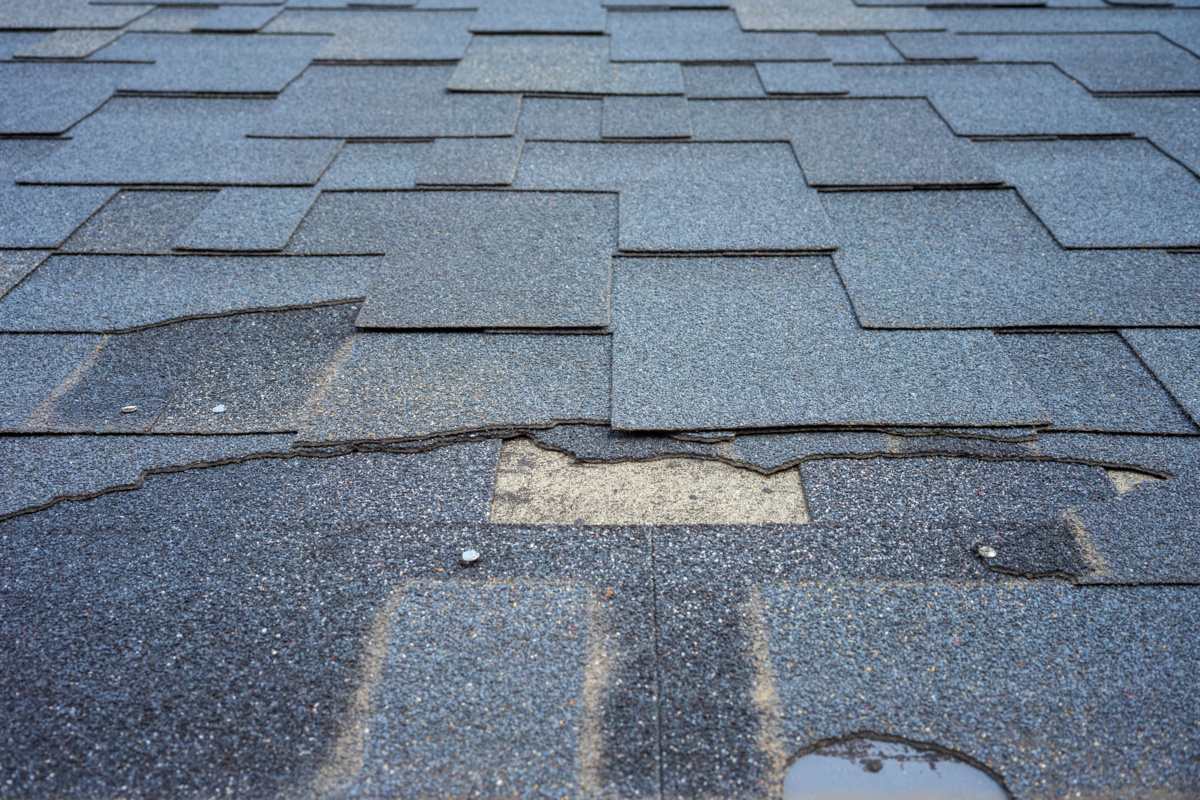
Shingles that curl upward or buckle often indicate aging materials. This condition reduces wind resistance and exposes the roof to water intrusion.
2. Cracked or Broken Shingles
Temperature changes and impact damage can cause shingles to crack. Damaged shingles weaken the roof’s protective layer.
3. Granules Collecting in Gutters
As shingles age, they lose protective granules. If you notice large amounts of granules in gutters or near downspouts, your roof may be nearing the end of its lifespan.
4. Missing Shingles After Storms
Wind and storm activity can loosen shingles. Missing shingles expose the underlayment and roof decking to moisture.
5. Water Stains or Attic Leaks
Interior water stains often indicate roof failure. Leaks usually mean the roofing system has already been compromised.
Pro Tip: Schedule a professional inspection if you notice multiple warning signs. Early evaluation can prevent larger repairs.
When You Should Replace Shingles Instead of Repairing Them
Minor damage can sometimes be repaired. However, widespread issues often require a full roof replacement.
The 25 Percent Damage Rule
If more than 25 percent of your roof requires repair, replacement is usually more cost-effective. Extensive repairs may only delay the need for a new roof.
Repeated Repairs in the Same Area
Frequent patchwork repairs often indicate deeper roofing problems. Repeated fixes may hide structural issues beneath the shingles.
Storm Damage Across Multiple Roof Slopes
Large storms can damage entire roofing systems. When multiple slopes show damage, replacement is often the safest solution.
Key Takeaway: If repairs become frequent or widespread, replacing the roof usually provides better long-term protection.
How to Know When to Replace Shingles
Age is often the clearest indicator. Once a roof approaches the end of its lifespan, problems tend to appear more frequently.
Watch for these signs:
- Roof age exceeds 20 years
- Multiple damaged areas appear after storms
- Repairs occur more than once per year
- Visible wear across large sections of the roof
Regular inspections can help confirm whether replacement is necessary.
How Often Should Homeowners Schedule a Roof Inspection
Routine inspections help homeowners track roof condition and prevent unexpected failures.
We typically recommend:
- Annual roof inspections
- Inspections after major storms
- Pre-winter inspections for older roofs
Professional inspections identify issues that are difficult to see from the ground.
What Happens During a Professional Roof Inspection
At Peak25 Roofing, we follow a detailed 25-point roof inspection that evaluates the entire roofing system. Our team checks key areas, including gutters and drainage, attic ventilation, flashing and roof penetrations, structural components, roof edges, and the overall shingle surface.
This inspection helps identify damage, detect early warning signs, and determine the overall condition and remaining lifespan of the roof.
Plan Ahead Before Roofing Problems Start
Most asphalt shingle roofs last between 15 and 30 years. Weather exposure, installation quality, and ventilation all affect how long your roof performs. Regular inspections help identify early warning signs and prevent unexpected repairs.
If your roof is showing signs of age or storm damage, a professional evaluation can provide clear guidance. Our team at Peak25 Roofing helps homeowners understand their roof condition and plan the next steps with confidence. Contact Peak25 Roofing to schedule an inspection and find out if it is time to replace shingles.