
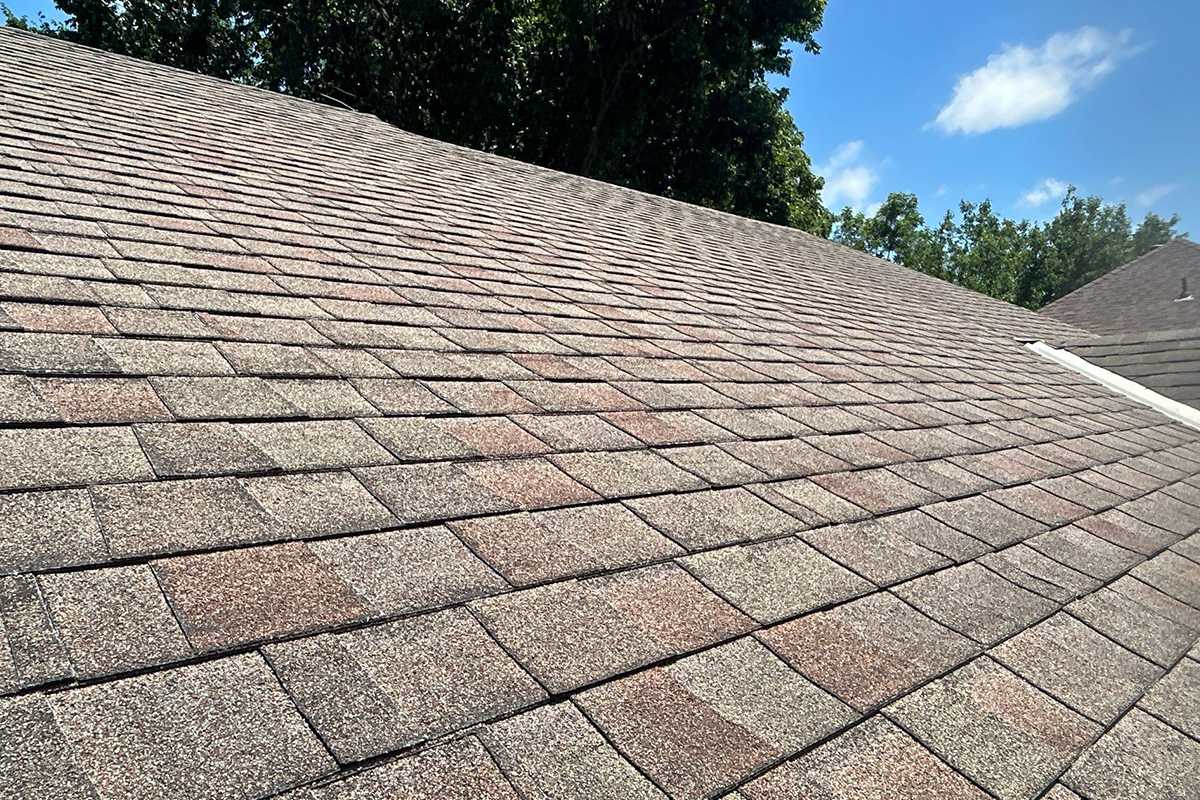
A roof that dips or bows is one of the few structural problems a homeowner can spot from the street. Every spring, Kansas City homeowners call us after noticing one, and most are worried about collapse. A sagging roof means the framing or decking has lost some of its ability to carry weight. It will not correct itself, and it gets worse with time. Below, we explain what causes it, how urgent it is, and what fixing it involves.
Where the Sag is Tells You What is Wrong
In our experience, the location of the dip is the fastest clue to what is failing beneath the shingles.
Sag Along the Ridge Line
A dip at the peak usually points to an undersized ridge board, missing rafter ties, or exterior walls that have started to spread. Check your attic for rafters that have pulled away from the ridge.
Sag in the Middle of a Roof Plane
A dip between the ridge and the eave typically means rotted decking, rafters spaced too far apart, or too much weight on the structure. This is the most common pattern we find on older homes with multiple shingle layers.
Sag at the Eaves or Edges
A drooping edge almost always traces back to water. Ice dams, overflowing gutters, and rotted fascia soak the lowest part of the deck first, and the wood softens from the outside in.
Key Takeaway: Edge sag is usually a water problem. Ridge and mid-plane sag are usually framing problems. Both need a look from someone who can get into the attic.
7 Common Causes of a Sagging Roof
The Causes We See Most Often
- Water damage and rot. Leaks from failed flashing, damaged shingles, or clogged gutters let moisture into the decking and rafters. Look for dark staining or soft spots in the attic.
- Excess weight. Heavy snow and ice add load, and so does a second or third layer of shingles installed over the old ones. Two layers can add several thousand pounds to an average roof.
- Undersized or damaged rafters. Framing that is too thin, spaced too wide, or cracked cannot carry the load placed on it.
- Poor attic ventilation. Trapped heat and humidity warp wood and speed up rot. If your attic feels like a sauna in July, this is worth checking.
- Age. Wood loses strength over decades. A 40-year-old roof structure has simply done more work than a 10-year-old one.
- Design or construction flaws. Missing collar ties, removed load-bearing walls, and poorly planned additions all shift weight onto framing that was never sized for it.
- Foundation and wall movement. A shifting foundation moves the walls, and the walls move the roof. Roof sag is sometimes a symptom of a problem two stories down.
Why Kansas City Roofs Sag Faster
Our area is hard on roof structures. Hail damage opens the surface so water reaches the deck. Freeze-thaw cycles build ice dams along the eaves.
Wet spring snow is heavier than the powder other regions see. Expansive clay soil shifts foundations. On top of that, much of the housing stock in Lee’s Summit, Independence, and Raytown was built between the 1950s and 1970s, when layering new shingles over old ones was standard practice.
Pro Tip: If you are not sure how many shingle layers your roof has, look at the edge from a ladder. A thick, stepped profile at the drip edge usually means more than one layer.
Is a Sagging Roofline Dangerous? How to Judge Urgency
A sag is a structural warning sign, and the right response depends on what else you notice.
Call a Roofer Today If You See
- A visible dip along with cracking or popping sounds in the attic
- Doors or windows that recently started to stick
- New cracks in ceilings or upper walls
- Water inside the home below the dip
- A sag that appeared right after a storm or heavy snow
Schedule an Inspection This Month If You See
- A slight dip with no interior symptoms
- A wavy roofline on an older home that has not changed in years
Key Takeaway: Do not walk on a sagging section, and do not let anyone install new shingles over it. Adding weight to weakened framing is how a repair turns into a collapse.
What a Sag Means for Your Home and Your Budget
Repair or Replacement?
A sag does not automatically mean a new roof. When the damage is limited to a few rafters or a section of decking, a targeted roof repair can sister new lumber alongside the old, add collar ties, and replace rotted sheathing. Replacement becomes the answer when rot is widespread, trusses have failed, or the roof carries multiple layers that all need to come off. In those cases, a full roof replacement is the safer long-term choice.
Our 25-point inspection includes structural checks for exactly this reason. Item 14 on our checklist covers dips and sag in the structure, and we photograph what we find so you can see it too.
Sagging Roof Repair Costs and Insurance
Localized rafter and decking repairs typically run in the low thousands. Structural rebuilds and full replacements cost more, and the price depends on roof size, pitch, the number of shingle layers to remove, and how far the rot has spread. Financing is available for larger projects.
Insurance usually covers a sag caused by a sudden event such as hail, wind, or a fallen tree, and our storm restoration team can help you document the claim. It rarely covers sag caused by age or deferred maintenance. Documentation matters, so take dated photos as soon as you notice the problem.
Need expert help with a roof that is dipping or drooping? Contact Peak25 Roofing for a free 25-point inspection and estimate.
How to Prevent Roof Sag
- Keep gutters clear, so water leaves the roof edge instead of soaking it
- Fix leaks within the week you find them
- Never install new shingles over an existing layer
- Confirm your attic has balanced intake and exhaust ventilation
- Get an inspection every year, especially after hail season
Key Takeaway: Nearly every cause on the list above starts with water or weight. Control those two and your framing will last as long as the house.
Not Sure How Serious Your Sag Is?
A dip in the roofline is not something to watch for another year. Our team serves Lee’s Summit, Kansas City, and the surrounding metro, and every project starts with a free 25-point inspection and a clear, written explanation of what we found. Call (816) 524-5100 or book online, and let us tell you exactly what is going on with your sagging roof.